Showing posts with label Models. Show all posts

Top 10 Affordable New Models Of 2016

Leave a Comment


Last month we brought you the Top 10 Most Anticipated Bikes of 2016. For February, let’s take a look at the most affordable new bikes of 2016, because, well, a lot of the bikes in that other list are pricey: XDiavelBrutale 800Super Duke GT … you get the picture. There already exist a lot of motorcycles in the sub-$10k price category, and here’s 10 more new models joining that list. From retro to modernistic, cruiser to sportbike, on-road to off, there’s a little something for everyone in this list.

A few of the prices we had to guesstimate due to the unavailability of an official MSRP, butMO editors have won the Price is Right Showcase Showdown 32 times, so we’re fairly confident in our pricing prognostications. We’ll begin with the most expensive bikes on the list and work our way down. Let’s kick this list off with two very similar new models from Moto Guzzi.

10. Moto Guzzi V9 Bobber & Roamer


At $8,990 the V7 II Stone is the most affordably priced model in the Moto Guzzi lineup, and winner of our HepCat TooCool Millennial Shootout. Producing only 41 horsepower and 40 lb-ft of torque from its 744cc, the V7 II is somewhat underpowered. With the announcement of a new 850cc V-Twin engine – the V9 – powering two new models, Bobber and Roamer, we’re expecting big things from the two new bikes.


9. Indian Scout 60


So impressed were we with the first Indian Scout we named it our 2015 Motorcycle of the Year. For 2016, Indian is following up the success of the Scout with the more affordably priced Scout 60. What’s the difference between the two? For $2300 less ($8,999 vs $11,299) the Scout 60 comes with one less gear (five vs six) and 134 fewer cubic centimeters (999cc vs 1133cc).


8. KTM 690 Duke


It may just be a glorified thumper, but KTM’s 690 Duke is certainly the overachiever in this list. At $8,999 the new 2016 model retains the same MSRP of the old 690 Duke it’s replacing.

7. Triumph Street Twin


It’s almost impossible for 2016 to be a bigger model year for Triumph than it already is. This year the Hinckley factory will launch  two new Speed Triples, an expanded family ofExplorersthree new engines powering five new Bonnevilles, and then there’s the recentspy photos of another new Bonneville. The most affordable among all of these is the newStreet Twin – an $8,700 Bonneville powered by a new liquid-cooled 900cc parallel-Twin. “The OG British Superbike, circa 1965, takes on an entirely new character in the new Street Twin, a modern classic set to inspire a new generation,” says old-is-new-again editor, Burnsie, in his 2016 Triumph Street Twin First Ride Review.

6. Yamaha XSR900
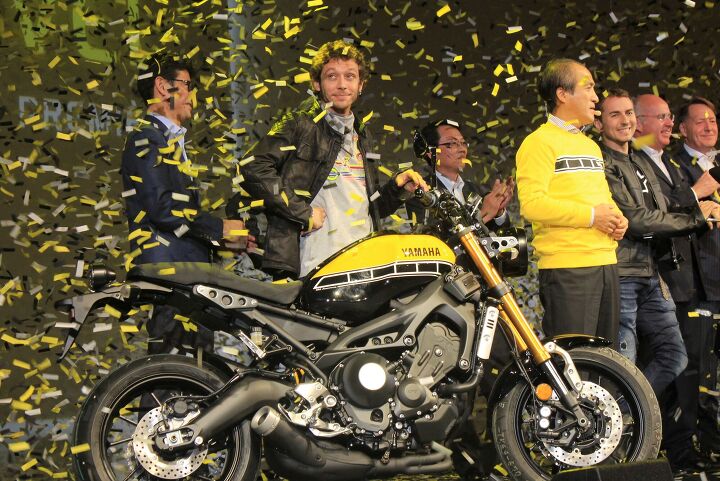


The XSR900 is the third iteration utilizing Yamaha’s potent 847cc liquid-cooled DOHC inline three-cylinder. Both the FZ-09 and FJ-09 have won numerous shootouts here at MO and, since the mechanically alike XSR is largely a styling exercise, it should exhibit similar performance qualities and continue the Triple’s winning tradition. Yamaha is releasing the pricing details February 16, but knowing the 2016 FZ-09 retails for an incredibly affordable $8,190, we’d be surprised if the XSR’s price strayed far from that figure. Even Vale seems to think this is a cool new bike.

5. Ducati Scrambler Sixty2


Eight grand for an air-cooled 400cc motorcycle seems a little steep to us, but theScrambler Sixty2 is a Ducati and it’s cool. So, maybe that’s all it needs to demand its premium asking price. It’s $7995 MSRP got it to fifth place in this Top 10, though, so the Sixty2 remains a relatively affordable new model for 2016. But don’t take our word for it. Here’s a lovely video chock full of surfing, skating, motorcycling millennials having the time of their lives with the Scrambler Sixty2.

4. Suzuki SV650
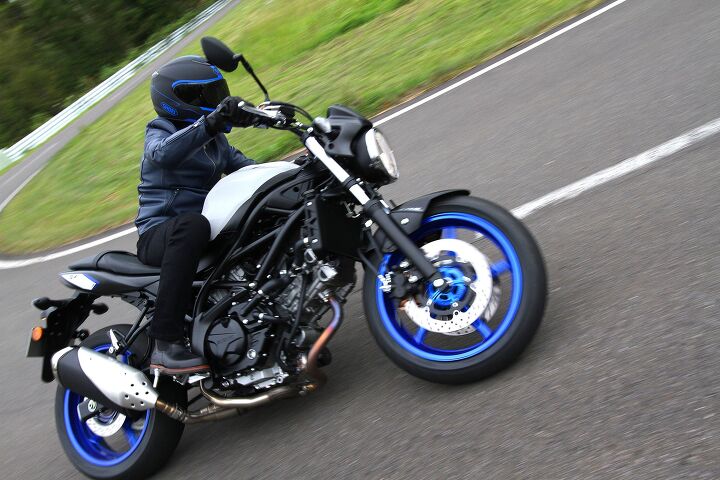


According to Suzuki, the new SV650 is returning to all the elements that made the original SV a cult classic – but with more of everything. The 645cc liquid-cooled V-Twin has been updated with more than 60 new parts, boasting more low-to-mid range horsepower and torque, as well as improved fuel economy and lower emissions. The SV’s updated chassis incorporates more than 70 new parts and components, and when combined with the new steel truss frame, equals a weight reduction of 15 pounds over the previous model.
Top 10 Reasons The Suzuki SV650 Is A Great Bike
Like Yamaha and its XSR900, Suzuki is keeping a tight lip on the SV650’s retail price. We can, however, approximate from the $7,599 MSRP of the Kawasaki Ninja 650 ABS that to remain competitive, the new SV should be priced somewhere near the Ninja. We estimate the SV will be priced around the $8,000 mark. New SVs are targeted to be available in dealers in late spring to early summer.

3. Honda CBR500R


The 2016 Honda CBR500R was aggressively restyled to more closely resemble itsCBR600RR and CBR1000RR counterparts. In addition to its new styling, the CBR500R also receives new LED headlights and taillights, a lighter muffler design for better mass centralization and an “improved” exhaust note, according to Honda. Other additions include an adjustable front brake lever, smoother gear change feel, a larger fuel tank with hinged cap, and preload-adjustable front suspension. The 2016 Honda CBR500R will be available in Red, Matte Black Metallic and Pearl White, starting in early 2016 with an MSRP of $6,499.

2. BMW G310R


BMW’s forthcoming G310R will be the smallest displacement motorcycle in the OEM’s model lineup since forever. With S1000R styling cues, and powered by a 313cc Single with a slightly rearward canted cylinder and reverse-mounted cylinder head, the G310R is looking to make a splash in the small-displacement category. But, as editor of all things tiny, Troy Siahaan points out in his BMW G310R Versus The World article, the G310R is joining some already established models as well as a few more new ones that will most likely be joining the fun soon. BMW hasn’t announced the G310R’s pricing, but to be competitive against the likes of Honda’s CB300F ($3,999) or KTM’s 390 Duke ($4999) it should be $5k or less (Honda’s CB500F is $5,799). As soon as BMW releases the G310R’s MSRP, we’ll let ya know.

1. CSC TT250


For a limited time, if you put a $1,000 deposit on CSC’s new TT250, you can purchase the bike for $1,895 – a brand new 250cc motorcycle for under $2k! When the special event ends, the retail price for the TT250 will be $2,495, which remains an incredibly good deal by any new-bike standards. We tested CSC’s RX3 Cyclone about a year ago and came away impressed with its performance and craftsmanship. The new TT model looks to match the RX3 in those categories but in a package reminiscent of a Honda CRF250L ($4,995).
2016 CSC TT250 Announced, With $1895 Introductory Price
TT250 models should be available by March. We’ve already requested a test unit and will be bringing you a full review, as well as shootout against its competition, in the near future. For more information or to order, visit cscmotorcycles.com or call (909) 445-0900.


Read More...

Euro 2016: All you need to know as England, Wales and Northern Ireland travel to France

Leave a Comment


Euro 2016 will be contested by 24 teams over 30 days at 10 different venues in France.
The final will take place at the Stade de France in Paris on 10 July, with Spain hoping to retain the title they won in 2008 and 2012.
England will be appearing at their ninth finals, while Wales and Northern Ireland have qualified for the first time.

How does it work?

Good question - because, for the first time, there are 24 teams competing in the finals. That is an increase from the 16 that had taken part in every edition since it was hosted in England in 1996.
With six groups of four teams, it means the top two will qualify for the quarter-finals, plus the four best third-placed finishers. In other words, only eight teams will fail to qualify from the group stage.
One point could be enough to put your team into the last 16 - and from then the tournament goes to a knockout format.
The Euro 2016 draw
Group AGroup BGroup C
FranceEnglandGermany
RomaniaRussiaUkraine
AlbaniaWalesPoland
SwitzerlandSlovakiaNorthern Ireland
Group DGroup EGroup F
SpainBelgiumPortugal
Czech RepublicItalyIceland
TurkeyRepublic of IrelandAustria
CroatiaSwedenHungary

Who is going to win?

As Greece proved by pulling off a sensational triumph at Euro 2004, trying to predict a winner is a difficult game.
World champions Germany are understandably one of the favourites, while holders Spain are also short odds with the bookmakers.
Germany finished top of their qualification group but booking their place in France was not without its hiccups - with defeats by Poland and the Republic of Ireland. They have been beaten by France and England since qualifying but remain one to watch.
Spain dominated international football between 2008 and 2012 but failed to qualify from their group at the 2014 World Cup. Could this be a last hurrah for Vicente del Bosque's ageing but brilliant side?

What are the chances of a home victory?

France won the World Cup as hosts in 1998 - can they repeat the famous success of the team led by Didier Deschamps, Zinedine Zidane and Laurent Blanc?
A run into the latter stages by Les Bleus is likely to help restore national morale in a country still recovering from last year's deadly Paris attacks.

France have been heavily tipped, but their form is tricky to gauge because they did not have to qualify for this tournament.
Fast on the counter and unified after years of internal division, watch out for talented midfielders Paul Pogba and Blaise Matuidi.


But they cannot call upon prolific Real Madrid striker Karim Benzema. The French Football Federation (FFF) said he would not be picked after being investigated for his part in an alleged plot to blackmail Les Bleus team-mate Mathieu Valbuena, who did not make the squad.

What about the home nations?

Well, there are three of them in France - only Scotland missed out - plus the Republic of Ireland. It is going to get crowded too, because England and Wales are both in Group B, along with Russia and debutants Slovakia.
Don't expect much work to get done when England and Wales play each other - that match in Lens will be shown live on BBC One, kick-off 14:00 BST, on Thursday, 16 June.
Roy Hodgson's England have a good young team but doubts persist about their defence. They breezed through their qualifying group with a perfect record of 10 wins, while confidence was further boosted with March's impressive winaway at world champions Germany.
Wales have got Real Madrid star Gareth Bale and plenty of heart. Chris Coleman's side reached their first major tournament in 57 years after losing just once in qualification.
Northern Ireland might have numerous players from England's lower leagues but they finished top of their qualifying group, losing just one of their 10 matches.
Striker Kyle Lafferty could not get a game for club side Norwich during qualifying (he has since been loaned to Birmingham) but he scored seven crucial goals in nine games for his country.
How the home nations have fared at the Euros
EnglandNorthern IrelandWales
Finals appearances8DebutDebut
Best finishSemi-finals (1968, 1996)--

Who do the home nations play?


Many new faces?

With the 24-team format offering hope to traditionally less-successful nations, five countries have taken advantage to secure their European Championship finals debut.
Northern Ireland and Wales, of course, are two of them.
Slovakia, who have been drawn alongside England and Wales in Group B, have qualified for the first time as an independent state. A 1-0 win against Spain showed the 2010 World Cup qualifiers can mix it with Europe's elite. Beware England and Wales.

Albania have never been near a major finals, but edged out Denmark - the 1992 champions - in their qualifying group thanks to a shock win in Portugal. Oh, and because they were awarded a 3-0 win in Serbia by the Court of Arbitration for Sport after a riot.
With a population of roughly 330,000 (comparable to Coventry) and only 21,508 registered players, Iceland are unsurprisingly the smallest nation to ever qualify for the finals.
How did they do that? By beating the Netherlands - 1988 winners and three-time semi-finalists - home and away during qualifying. The Dutch, for the first time since 1984, will not be there.

Who will be the star players?

Real Madrid superstar Cristiano Ronaldo, who was voted the world's second best player behind Argentina's Lionel Messi in the 2015 Ballon d'Or vote, heads a star-studded cast.
Ronaldo will be leading Portugal's challenge, while Wales hope his club-mateGareth Bale - the world's most expensive player - can transform his impressive La Liga form onto the international stage.
World Cup winners Germany boast a host of stellar names who have impressed in previous tournaments, most notably Bayern Munich goalkeeperManuel Neuer and forward Thomas Muller plus Real Madrid midfielder Toni Kroos.
France's challenge is set to be driven by energetic Juventus midfielder Paul Pogba, who is still reportedly courting the attention of several English Premier League sides.
Belgium are not short of star quality either. Premier League pair Eden Hazardand Kevin de Bruyne will spearhead their quest for a first major tournament win, but the Red Devils are without injured captain Vincent Kompany.
And Sweden superstar Zlatan Ibrahimovic, 34, will be hoping to illuminate an international tournament for what could be the final time.
The Netherlands' failure to qualify leaves Bayern Munich winger Arjen Robbenwatching from home, while his club-mate Franck Ribery was not named in the France squad, despite suggestions he was considering ending his international retirement.

Where will the games be played?


The tournament's 51 games will be staged at 10 locations across France, including new stadiums in Bordeaux, Lille, Lyon and Nice.

The opening match - between France and Romania on 10 June - and the 10 July final will be played at the Stade de France in Paris.
Building the new venues and renovating historic grounds such as Marseille's Stade Velodrome has cost 1.6bn euros (£1.2bn) - modernisation which was necessary, organisers say, because France did not fully capitalise on hosting the 1998 World Cup.
Vibrating stands, floating roofs and adjacent slag heaps - read BBC Sport's venue-by-venue guide

What's new for Euro 2016 (and beyond)?

In March this year, the International Football Association Board (IFAB) ratified a host of revisions to the laws of the game in an attempt to remove inconsistencies and meet the needs of the modern game. The changes came into effect on 1 June, so will apply for Euro 2016.
More than 90 revisions were made, but these are some of the key changes:
Kick-off: Previously, the ball had to go forward from kick-off but the rule has been changed to allow it to go in any direction.
Pre-match red cards: Players can now be sent off before a match gets under way, although they can be replaced by another player in the match-day squad.
Leaving the pitch after treatment: If a player is injured in a challenge resulting in a yellow or red card, they no longer have to leave the field and can have a quick assessment or medical treatment. This change is designed to prevent situations where a team would be temporarily down to 10 players.
The end of 'triple punishment': A professional foul inside the area will now normally result in a yellow card for the offender, and not a red. This is to end the so-called triple punishment of penalty, dismissal and suspension, which was seen by some as excessive. There are exceptions for when the offender will receive a red which include holding, pushing or pulling and violent conduct.
Goalline technology, already established in the Premier League and elsewhere, will be used at Euro 2016.

Can I still buy match tickets?

Yes. But you had better be quick. Most of the group games - including all of England and Wales' matches - are sold out.
However, there are limited tickets available for Northern Ireland's match against Ukraine, plus other games involving some of the smaller nations. There are also tickets available for the opening game between France and Romania - at 445 euros each.

Where can I watch matches if I travel to France without a ticket?

Each of the 10 host cities will have official Uefa fan zones. The fan zones will have a giant screen for showing all of the matches throughout the tournament.
The biggest will be in Paris, where up to 90,000 supporters can gather on the Champ de Mars - in the shadow of the Eiffel Tower.

What about if I stay at home?

You won't miss a kick.
The BBC and ITV will bring audiences closer to the heart of the action than ever before with extensive coverage of Euro 2016.
The BBC will showcase 26 live matches on TV and streamed online within its 140 hours of programming, including highlights on BBC One, BBC Two and the Red Button plus 24 days of coverage on Radio 5 live.
The BBC's Euro 2016 digital service will feature live broadcasts of all BBC games, commentary and live text coverage of every game featuring in-game highlight clips, on-demand highlights of every goal, breaking news, exclusive features and expert analysis.
ITV will be home to 26 live games across ITV1 and ITV4, which will be simulcast live on the ITV Hub.

What about security at the tournament?

The French government has extended a state of emergency imposed after the Paris attacks in November to cover Euro 2016.
The coordinated gun and bomb attacks in Paris on 13 November killed 130 people and were claimed by so-called Islamic State.
The Stade de France, which was targeted by suicide bombers, will host the opening match of Euro 2016 and the final.
The current state of emergency gives police extra powers to conduct searches and put people under house arrest.
More than 90,000 police, soldiers and private security agents are being deployed as well.
Read More...